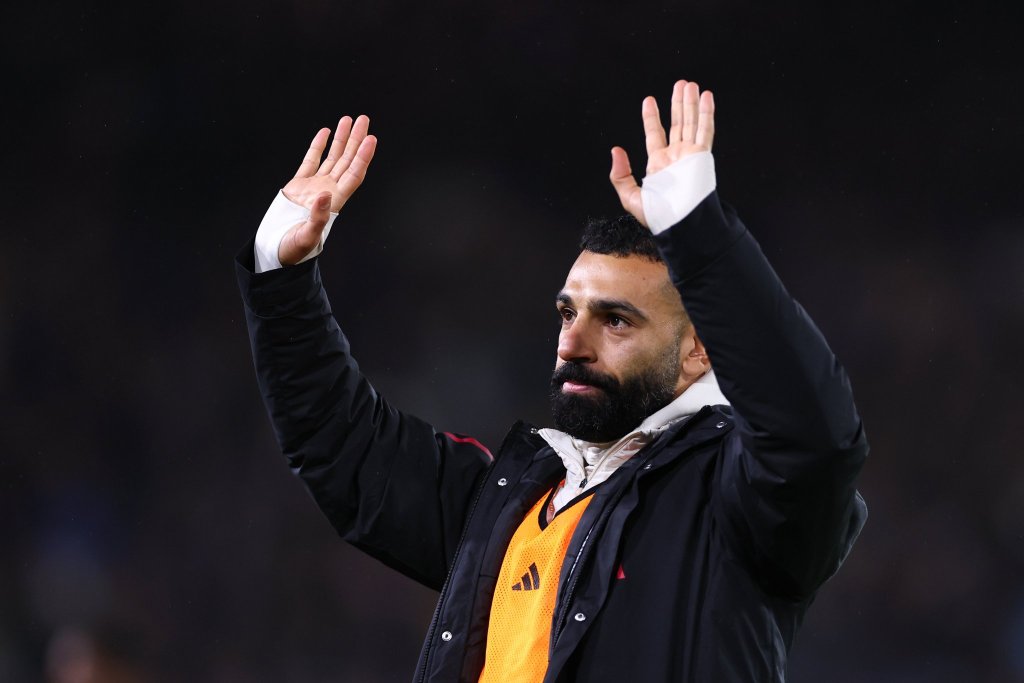
It takes something seismic to overshadow a Champions League night, but Liverpool found themselves doing exactly that this week, swept into a storm involving Mo Salah, Jamie Carragher, and Arne Slot that nobody at the club needed. What began as a few raised eyebrows about team selection has grown into a story stretching beyond the pitch, beyond the press room, and into the very heart of Liverpool’s season.
The Interview That Lit the Fuse
The tension between Salah and Slot didn’t arrive in a single moment; it built quietly over weeks. Slot had left Salah out of the starting XI on several occasions, decisions he insisted were purely tactical. Even so, the sight of Liverpool’s long-standing talisman sitting on the bench for key matches left supporters puzzled and set the stage for frustration to boil over. When Slot again relegated Salah to a substitute role for the Leeds match, the unease seemed impossible to ignore.
Salah’s post-match interview that night was the spark that finally lit the fuse. He didn’t hide his emotions and didn’t try to dress his words in diplomacy. He said he felt singled out, admitted his relationship with Slot had “broken down,” and suggested he had been “thrown under the bus.” For a player normally careful, composed, and relentlessly professional in front of cameras, the honesty landed like a hammer. It was a moment that combined the shock of genuine bluntness with the weight of a club legend expressing unhappiness not with his role, but with his manager.
Carragher Responds and the Story Grows Legs
Jamie Carragher’s response came quickly. Speaking on television, he labelled Salah’s comments “a disgrace” and accused him of stepping outside the standards expected of a senior player at Liverpool. It wasn’t the first time Carragher had been outspoken, nor the first time Salah had been the subject of pundit scrutiny, but this time the timing was terrible and the tone stung.
Salah’s camp did not appreciate Carragher’s phrasing, and the back-and-forth that followed in the media created a storyline that ran parallel to the original issue, making an internal footballing dispute feel suddenly like a public feud between club royalty.
Slot’s Measured but Firm Response
Arne Slot, meanwhile, had little interest in adding further fuel but made his own response in a way managers have done for decades. When Liverpool’s squad list for the Inter Milan match was confirmed, Salah’s name was not on it. Slot made it clear his decision was tied directly to the interview, describing it as a necessary step to protect the standards he expects from every player, no matter their stature.
Some supporters backed him for taking a firm line; others worried the situation had become too combustible to contain. Either way, Slot had underlined one unmissable message: he would not allow public frustration to dictate how his team operates.
Gerrard Steps In With a Captain’s Diplomacy
Into the noise stepped Steven Gerrard, whose voice still carries unique weight at Liverpool. Gerrard urged unity and encouraged Salah to apologise, noting that emotions often run high when great players battle great expectations. He also took care to praise Slot’s handling of the situation, saying the manager’s approach was measured and understandable given the pressure surrounding the club. Gerrard’s intervention was not a lecture but a reminder of how fragile harmony can be, especially for a team with ambitions stretching far beyond November.
Robertson Highlights the Need for Resolution
Andy Robertson’s comments added another layer, not by criticising anyone but by acknowledging what everyone already sensed: this could not be allowed to drag on. His message was light in tone but serious in meaning: the squad needed the matter resolved. Liverpool’s dressing room is strong and united, but it is not immune to distraction, and no team with hopes of challenging for major honours can afford a storyline like this to hang around for long.
A Parallel Feud That Distracted From the Real Issue
It must also be said that Salah and Carragher’s relationship has never been particularly fiery. Carragher has criticized him before, and Salah has occasionally disagreed, but it has usually been the kind of pundit-player tension that disappears within a day. What changed this time was the backdrop. With Salah’s own frustration already simmering and Slot’s decisions under scrutiny, Carragher’s comments landed harder than perhaps he intended. This was not about two personalities clashing; it was about timing, visibility, and a sense that the club suddenly had too many conversations happening in the open.
What It Means for Liverpool’s Season
Liverpool supporters have experienced enough drama over the years to know when something is threatening to spill beyond the boundaries of normal football turbulence. Nobody is panicking, and nobody should be. Slot is intelligent, calm, and meticulous. Salah is a professional who has overcome far larger challenges in his career. Carragher will say what he believes, and Gerrard will always step in with the steadying hand of someone who has captained Liverpool through eras far more chaotic than this. But Liverpool are also entering a stretch of the season where points are precious and momentum is fragile, and every week spent dealing with off-pitch narratives risks affecting the focus required on it.
This situation does not need a dramatic ending or public confrontation. It simply needs conversations behind closed doors, an apology if one is required, and a collective agreement to move forward. The danger lies not in the personalities involved, but in the potential for this saga to drag into December and become the kind of lingering shadow that good teams can’t outrun.
Liverpool’s season is still full of promise. But the club cannot afford for this to become the defining subplot of the winter. Slot, Salah, Carragher and the rest of the Liverpool family will know exactly what must happen next — put the noise to bed, restore the unity the club thrives on, and get back to the kind of football that makes all this conversation disappear.
 Anything Liverpool
Leave a comment